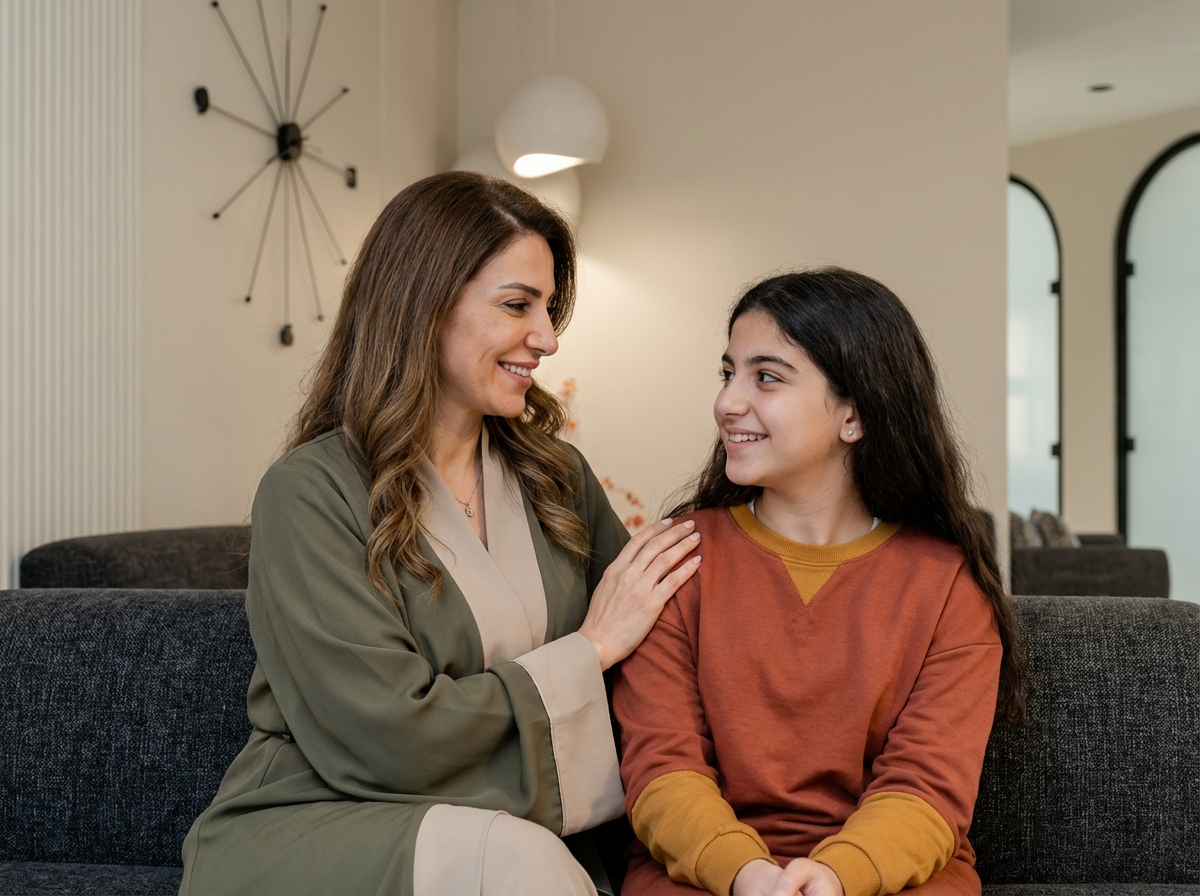
If you’ve ever felt nervous about “the puberty talk,” you’re not alone. The good news: you don’t need the perfect script. What matters most is showing up with calm, honest guidance—so your child feels prepared, not scared.
Many parents wait until physical changes appear, but starting earlier is often more helpful. The American Academy of Pediatrics recommends beginning puberty conversations at ages 7–8, before visible changes begin—so children can understand what’s coming and feel empowered.

When kids know what’s coming, puberty feels a lot less scary. A calm, simple explanation—using everyday words—can help your child feel prepared, reassured, and confident. Here are some of the most common changes girls may notice as puberty begins.
Often the first sign—starting as small “buds” that can feel tender.
Hair may appear in the pubic area and underarms.
These can happen suddenly—some girls grow several inches in just months.
Menstruation typically begins 1–2 years after breast development, commonly around ages 12–13 (but it can start earlier).
Hips may widen, body fat redistributes, and skin may become oilier—sometimes causing acne.
If you’ve ever felt anxious about “the puberty talk,” you’re not alone. There’s no perfect script—what matters most is your presence, your honesty, and your willingness to guide your child through a major life transition with calm confidence.
validation without judgment. Even when emotions feel “bigger than the situation,” your calm presence teaches safety and resilience.
Sometimes families need reassurance, accurate medical guidance, or help with concerns around puberty, cycles, pain, or emotional well-being. The document explicitly positions support through Dr. Najat Hazimeh Clinic in Dubai Healthcare City, including puberty management and menstrual health education.
Many experts recommend starting around ages 7–8, before physical changes begin.
Breast buds are commonly one of the first signs.
Yes—emotional shifts like sensitivity, irritability, and wanting more privacy are common.
Often 1–2 years after breast development, commonly around 12–13 (sometimes earlier).
The document references Dr. Najat Hazimeh Clinic in Dubai Healthcare City as a support option for puberty management and menstrual health education.

For many teenage girls, periods can feel overwhelming—especially when pain, heavy bleeding, or irregular cycles begin to affect school, sports, and daily life.